| |
Home
3hf Hilfsprojekte
- Hilfsgüterzentrale
- Haiti
- Grönland
Aktuell/Events
Spenden Sie
Über uns
Shop >>
|
|
Stiftungsurkunde
>> Das Original der Stiftungsurkunde als PDF
I. Name, Sitz, Zweck und Vermögen der Stiftung
Art. 1 Name und Sitz
Unter dem Namen „3hf Stiftung Schweiz“ besteht eine selbständige Stiftung von Art. 80 ff des Schweizerischen Zivilgesetzbuches mit Sitz in 8755 Ennenda GL, Gemeinde Glarus. Sitzverlegungen an einen anderen Ort in der Schweiz bedürfen der Zustimmung der Aufsichtsbehörde.
Art. 2 Stiftungszweck
- Die Stiftung verfolgt keine kommerziellen Interessen und erstrebt keinen Gewinn.
- Engagement:
Die Stiftung plant, unterstützt und verwirklicht humanitäre Aktivitäten auf regionaler, nationaler und internationaler Ebene.
- Entwicklungsländer:
Die Stiftung plant und realisiert mit Unterstützung von lokalen Partnern eigene Hilfsprojekte und fördert Partnerprojekte in Entwicklungsländern.
- Die Stiftung unterstützt ideell und materiell in erster Linie Partnerprojekte, die sich für die Verbesserung der Ernährungssituation, der Wasserversorgung, der Gesundheit, der Landwirtschaft, der Wohnverhältnisse und/oder der Bildung engagieren.
- Einen weiteren Schwerpunkt setzt die Stiftung mit der Unterstützung materiell und finanziell hilfsbedürftiger Bildungsinstitutionen.
- Humanitäre Absicht:
Mit ihrem konfessionell neutralen Engagement beabsichtigt die Stiftung, in den jeweiligen Einsatzgebieten direkt und indirekt
- einerseits hilfsbedürftige Kinder, Jugendliche, Alte, Kranke und Behinderte zu unterstützen und zu fördern,
- andererseits hilfsbedürftigen Erwachsenen in unmittelbaren Notlagen Überlebens- und Starthilfen zur Existenzsicherung aus eigener Kraft zu vermitteln.
- Aktionsgebiet Umwelt:
Die Stiftung engagiert sich mit ihren Projekten stets auch für die Förderung des Wissenstransfers
- über den Schutz der Umwelt vor Verschmutzung und Ausbeutung,
- über die schonende, nachhaltige Nutzung der natürlichen Ressourcen Wasser, Boden, Luft, Pflanzen, Tiere sowie
- über Recycling.
- Naturnaher Ansatz:
Die Stiftung agiert nach einem konsequent naturnahen Denk- und Handlungsansatz:
Sie will in den jeweiligen Einsatzgebieten stets im Einklang mit der Natur-, Tier- und Pflanzenwelt agieren und dafür Sorge tragen, dass dieser Ansatz nach Beendigung ihrer Einsätze lokal möglichst nachhaltig weiter geführt und entwickelt wird.
- Kooperationen, Netzwerk:
Wo es vor Ort die Wirksamkeit von Hilfsaktionen durch Bündelung eingesetzter Ressourcen erhöhen kann, sucht die Stiftung temporäre oder dauerhafte Kooperationen mit anderen vor Ort tätigen Hilfswerken.
Zu diesem Zweck pflegt die Stiftung systematisch Kontakte und Beziehungen zu anderen Hilfswerken im In- und Ausland. Ziel ist die Schaffung eines informellen Netzwerkes.
- Zur Verfolgung ihres Zwecks kann die Stiftung im In- und Ausland Immobilien und Landwirtschaftsland erwerben, mieten oder pachten und/oder zugewiesen werden. Sie kann die Immobilie und das Landwirtschaftsland halten und/oder veräussern. Die Immobilien der Stiftung sind jeder spekulativen Verwendung zu entziehen.
Der Stiftungsrat kann über die Stiftungsorganisation und die Durchführung des Stiftungszweckes ein oder mehrere Reglemente erlassen. Die Reglemente und ihre Änderungen sind der Aufsichtsbehörde einzureichen.
Art. 3 Vermögen
Der Stifter widmet der Stiftung CHF 100'000.-- in bar als Stiftungsvermögen. Weitere erforderliche Mittel sollen aufgebracht werden unter anderem durch:
- Unterstützungsleistungen
- Zuwendungen aus der Organisation und Durchführung von Messen, Ausstellungen, Seminaren, Tagungen und anderen Veranstaltungen der Stiftung
- Zuwendungen für die Benutzung von stiftungseigenen Einrichtungen (so verfügbar)
- Subventionen aus Mitteln öffentlich-rechtlicher oder privater Institutionen oder Organisationen
- sonstige Einnahmen, wie Spenden, Vermächtnisse, Sammlungen und Zuwendungen
- Erträge aus der Verwertung von den durch die Stiftung geförderten Forschungsarbeiten, Ideen, Erfindungen und Neuerungen auf Grund der mit den Forschern und Erfindern getroffenen Vereinbarungen
Weitere Zuwendungen an die Stiftung durch den Stifter oder andere Personen sind jederzeit möglich. Der Stiftungsrat ist bemüht, das Stiftungsvermögen durch private oder öffentliche Zuwendungen zu vergrößern. Das Stiftungsrisiko ist nach anerkannten kaufmännischen Grundsätzen zu verwalten. Das Risiko soll verteilt werden. Das Vermögen darf nicht durch spekulative Transaktionen gefährdet werden, muss jedoch nicht mündelsicher angelegt werden.
II. Organisation der Stiftung
Art. 4 Organe der Stiftung
Organe der Stiftung sind:
- Der Stiftungsrat
- Die Revisionsstelle
Art. 5 Stiftungsrat und Zusammensetzung
Die Verwaltung der Stiftung obliegt einem Stiftungsrat von mindestens drei natürlichen oder juristischen Personen. Die Mitglieder des Stiftungsrates sind grösstenteils ehrenamtlich tätig und haben Anspruch auf Entschädigungen ihrer effektiven Spesen und Barauslagen. Für besondere Leistungen einzelner Stiftungsratsmitglieder kann eine angemessene Entschädigung ausgerichtet werden (Art. 13).
Der erste Stiftungsrat besteht aus folgenden Mitgliedern:
- dem Stifter und Präsident Hansjürg Hess
- Maria Baumgartner
- Gerhard Hofstetter
Art. 6 Konstituierung und Ergänzung
Der Stiftungsrat konstituiert und ergänzt sich selbst, wobei für dieses Amt nur Persönlichkeiten in Frage kommen, die durch ihre Einstellung und ihr bisheriges Engagement dem Stiftungszweck verbunden sind.
Art. 7 Amtsdauer
Die Amtsdauer von Mitgliedern des Stiftungsrates beträgt vier Jahre. Die Wiederwahl ist möglich. Der Stiftungsrat wird für jede Amtsperiode von den bisherigen Mitgliedern durch Kooptation neu bestellt. Fallen während der Amtsperiode Mitglieder des Stiftungsrates aus, so sind für den Rest der Amtsperiode Ersatzwahlen zu treffen. Abberufung aus dem Stiftungsrat aus wichtigen Gründen ist jederzeit möglich, wobei ein wichtiger Grund insbesondere dann gegeben ist, wenn das betreffende Mitglied die ihm obliegenden Verpflichtungen gegenüber der Stiftung verletzt oder zur ordnungsgemäßen Ausübung seines Amtes nicht mehr in der Lage ist. Der Stiftungsrat beschließt mit 2/3 Mehrheit über die Abberufung von Stiftungsmitgliedern.
Art. 8 Kompetenzen
Dem Stiftungsrat obliegt die Oberleitung der Stiftung: Ihm stehen alle Befugnisse zu, die in diesen Statuten (Urkunde und Reglement der Stiftung) nicht ausdrücklich einem anderen Organ übertragen sind. Der Stiftungsrat hat folgende unentziehbare Aufgaben:
- Regelung der Unterschrifts- und Vertretungsberechtigung für die Stiftung;
- Wahl des Stiftungsrates und der Revisionsstelle
- Abnahme der Jahresrechnung
Der Stiftungsrat erlässt über Einzelheiten der Organisation und der Geschäftsführung ein Reglement. Dieses kann jederzeit im Rahmen der Zweckbestimmung durch den Stiftungsrat geändert werden. Änderungen bedürfen der Genehmigung der Aufsichtsbehörde. Der Stiftungsrat ist berechtigt, einzelne seiner Befugnisse an eines oder mehrere seiner Mitglieder oder Dritte zu übertragen.
Art. 9 Beschlussfassung
Der Stiftungsrat ist beschlussfähig, wenn die Mehrheit der Stiftungsräte anwesend ist.
Die Beschlüsse werden mit einfachem Mehr gefasst. Bei Stimmengleichheit entscheidet der Präsident. Über Sitzung und Beschlüsse wird ein Protokoll geführt. Beschlüsse und Wahlen können auch auf dem Zirkulationsweg gefasst werden bzw. stattfinden, sofern kein Mitglied die mündliche Beratung verlangt. Zirkulationsbeschlüsse, Wahlen und Entscheide bedürfen der Zustimmung aller Mitglieder. Die Einladungen zu den Sitzungen des Stiftungsrates hat grundsätzlich 30 Tage vor dem entsprechenden Termin zu erfolgen.
Art. 10 Verantwortlichkeit der Stiftungsorgane
Alle mit der Verwaltung, Geschäftsführung oder Revision der Stiftung befassten Personen sind für den Schaden verantwortlich, den sie ihr durch absichtliche oder fahrlässige Verletzung ihrer Pflichten verursachen. Sind für einen Schaden mehrere Personen ersatzpflichtig, so ist jede von ihnen insoweit mit den anderen solidarisch haftbar, als ihr der Schaden aufgrund ihres eigenen Verschuldens und der Umstände persönlich zurechenbar ist.
Art. 11 Reglemente
Der Stiftungsrat legt Grundsätze seiner Tätigkeit in einem oder mehreren Reglementen nieder, die der Aufsichtsbehörde zur Genehmigung vorzulegen sind.
Art. 12 Revisionsstelle
Der Stiftungsrat wählt eine unabhängige, externe Revisionsstelle, welche das Rechnungswesen der Stiftung jährlich zu überprüfen und über das Ergebnis dem Stiftungsrat einen detaillierten Prüfungsbericht mit Antrag zur Genehmigung zu unterbreiten hat. Sie hat außerdem die Einhaltung der Bestimmungen der Statuten (Urkunde und Reglemente der Stiftung) und des Stiftungszwecks zu überwachen. Die Revisionsstelle hat bei der Ausführung ihres Auftrages wahrgenommene Mängel dem Stiftungsrat mitzuteilen. Werden diese Mängel nicht innert nützlicher Frist behoben, hat die Revisionsstelle nötigenfalls die Aufsichtsbehörde zu orientieren.
Art. 13 Entschädigung
Die Mitglieder des Stiftungsrates haben Anspruch auf ein jährliches Honorar, welches vom Stiftungsrat festgelegt wird. Im Weiteren haben Sie Anspruch auf Ersatz ihrer Spesen und Barauslagen.
Der Stiftungsratspräsident bezieht ein jährliches Pauschalhonorar von Fr. 6'000 netto.
Die übrigen Stiftungsratsmitglieder beziehen ein jährliches Pauschalhonorar von Fr. 2'000 netto.
Aufträge an Mitglieder des Stiftungsrates sowie projektbedingte Spesen werden gesondert nach branchenüblichen Ansätzen vergütet.
III. Änderung der Stiftungsurkunde und Aufhebung der Stiftung
Art. 14 Änderung der Stiftungsurkunde
Dem Stiftungsrat steht das Recht zu, durch einstimmigen Beschluss Änderungen der Urkunde der Stiftung der zuständigen Aufsichtsbehörde im Sinne von Art. 85, 86 und 86b ZGB zu beantragen.
Art. 15 Aufhebung
Die Dauer der Stiftung ist unbegrenzt. Eine vorzeitige Aufhebung der Stiftung darf nur aus den im Gesetz vorgesehenen Gründen (Art. 88 ZGB) und nur mit Zustimmung der Aufsichtsbehörde durch einstimmigen Beschluss des Stiftungsrates erfolgen. Bei der Aufhebung überträgt der Stiftungsrat das noch vorhandene Vermögen an gemeinnützige Organisationen und Stiftungen mit ähnlicher Zielsetzung. Ein Rückfall von Stiftungsvermögen an den Stifter oder dessen Rechtsnachfolger ist ausgeschlossen.
IV: Handelsregister
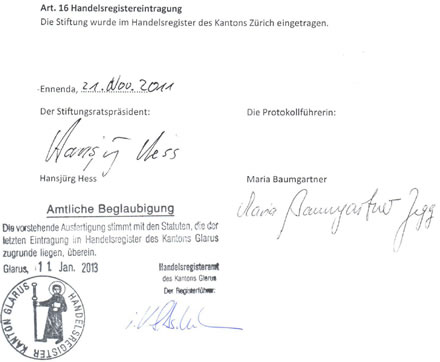
Art. 16 Handelsregistereintragung
Die Stiftung wurde im Handelsregister des Kantons Zürich eingetragen.
>> Das Original der Stiftungsurkunde als PDF
The Englisch version is coming soon
<< zurück
|
|
Spendenkonto:
PC 87-220000-8
3hf Stiftung
Schweiz, 8755 Ennenda
IBAN CH80 0900 0000 8722 0000 8
|
Kontakt:
3hf Stiftung Schweiz
Dornhaus 11
8777 Diesbach GL
info(@)3hf.org
++41 (0)55 653 10 10 |
Wir machen mit.
Helfen auch Sie!




- verschiedene Stiftungen
- diverse Privatpersonen
|
Besuchen Sie uns auf
 
|

|

 Die Stiftung 3hf Schweiz unterliegt